Entrances & boundaries
Unexpected activity, access outside usual hours or a concern at a controlled entrance can be brought to the attention of site personnel.
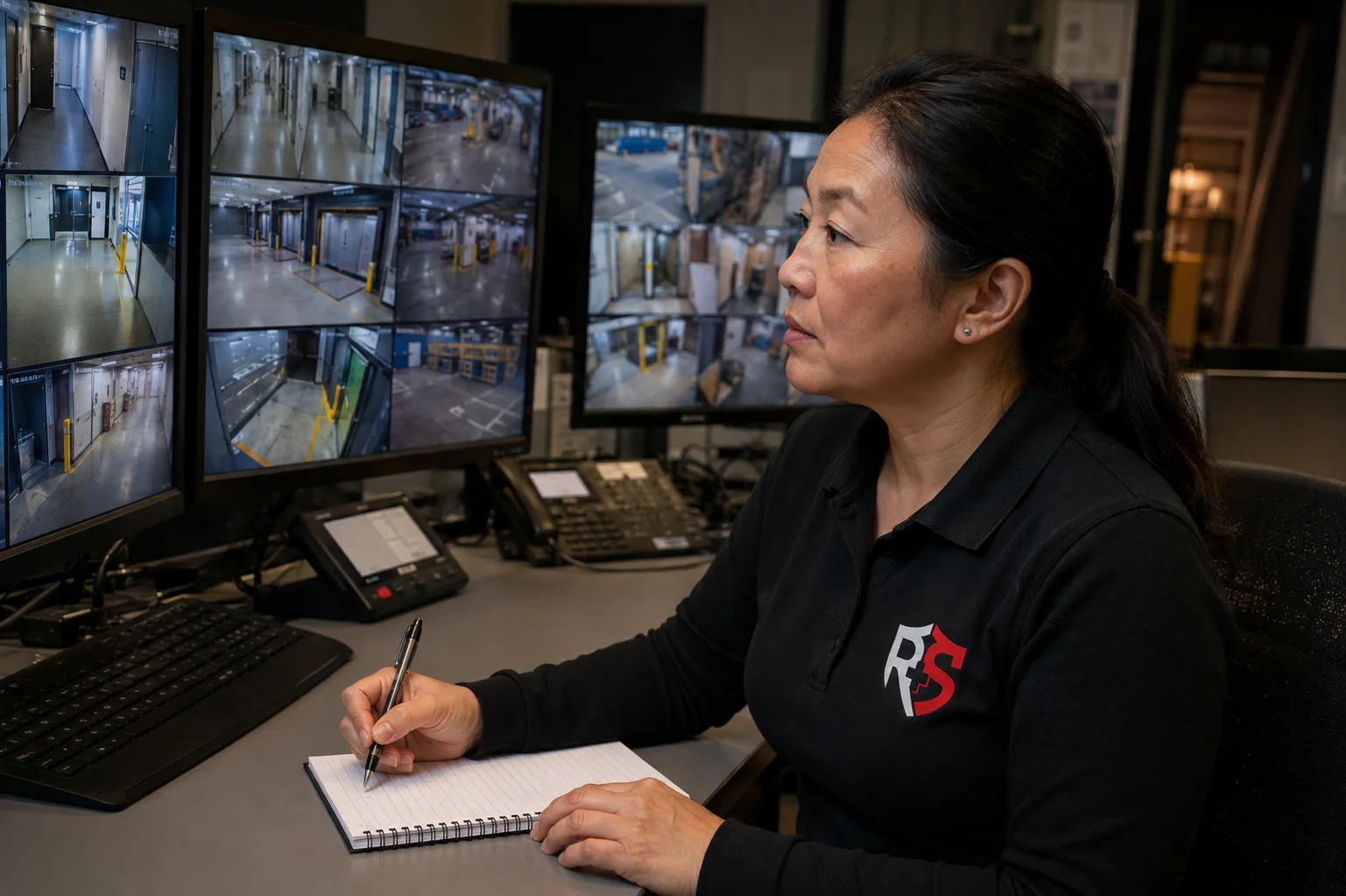
Attentive CCTV operators for your existing monitoring environment, helping turn camera coverage into useful security information.
Discuss your requirementA camera can show an area without anyone noticing the moment that matters. CCTV monitoring adds focused observation: a person looking for concerns and helping the right people understand what has happened.
Rescue Security provides SIA-licensed CCTV operators for existing control rooms and monitoring arrangements. Priorities are shaped around the site’s camera coverage, activity and the reasons the cameras are there.
Camera feeds need context. The time of day, normal activity and the location all help an operator recognise something that deserves a closer look.
Unexpected activity, access outside usual hours or a concern at a controlled entrance can be brought to the attention of site personnel.
Monitor agreed areas where valuable goods, equipment or deliveries create a particular security concern.
Observe developing incidents, congestion or people who may need assistance, with communication to the appropriate on-site contact.
Pass on recurring observations or unresolved issues so attention does not end when one operator’s shift finishes.
Discuss blind spots, image quality and periods without operator cover. Knowing those limits helps establish what the monitoring role can usefully support.
A useful observation explains the concern clearly. It helps site staff decide where attention is needed and provides a record for later review.
Operators work with your incident-recording and information-handling requirements. Access to footage, confidentiality and the treatment of personal information belong in the site’s monitoring instructions.
A record supports a decision. It should distinguish what was seen from what is being assumed.
This service is for CCTV monitoring personnel. We need to understand your existing equipment and operator requirement before discussing cover.
Yes. Monitoring can help direct the attention of on-site personnel to the relevant location or activity. The operator’s contact routes and the responsibilities of the responding team need to be clear.
Live observation and retrospective footage review are different tasks. Explain which work you need, the permitted access and the expected output so the requirement can be considered accurately.
Tell us about the system, monitoring hours and the areas that matter most to your operation.