
Queues that stay organised
Support ticket or accreditation checks, separate access routes where planned, and help avoid congestion spilling across entrances or pedestrian routes.
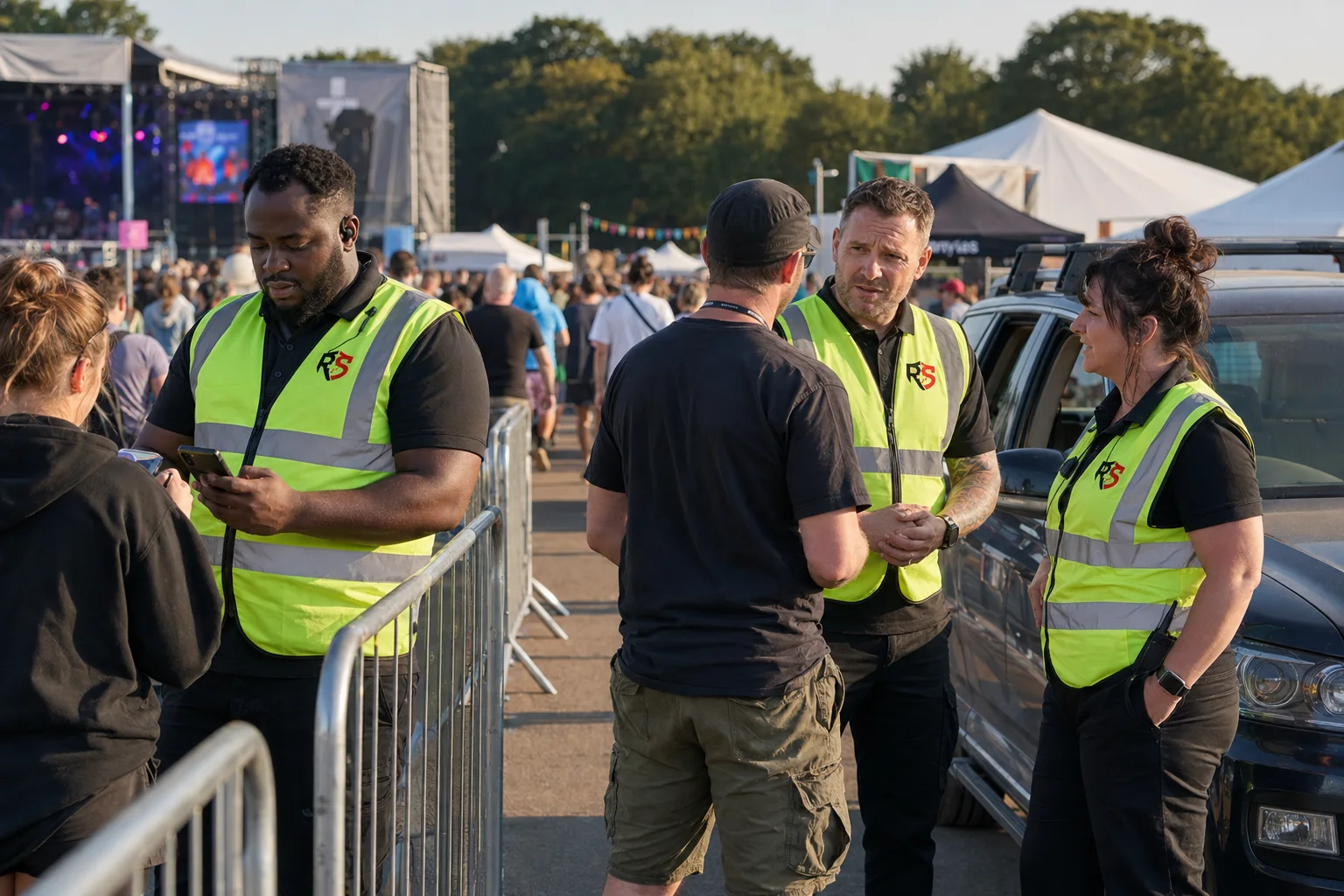
Calm, capable event teams supporting safe arrivals, crowd movement and a welcoming experience from the first guest to the last departure.
Discuss your requirementEvent security should help the occasion run smoothly and make guests feel welcome. The right people in the right positions support the organiser, the venue and everyone attending.
From corporate gatherings and private functions to public events and hospitality settings, we consider the venue layout, audience profile, access arrangements and the way the day will unfold.
Crowd management is about how people arrive, gather, move and leave. A queue at the entrance, an interval rush and a busy departure each create different demands.
Security personnel can support the organiser’s crowd plan by observing developing pressure, keeping access points controlled and communicating concerns to the people responsible for the event.
Support ticket or accreditation checks, separate access routes where planned, and help avoid congestion spilling across entrances or pedestrian routes.
Watch busy gathering points and changes in guest movement. Support designated routes and flag crowd build-up so the organiser can respond.
Help guests find the appropriate exit routes and support dispersal at the agreed close, while keeping staff and restricted areas protected.
Team size depends on the event layout, audience, access points and responsibilities—not attendance alone. Security positions should work with the venue’s capacity and emergency arrangements.
A clear assignment starts with the right conversation.
We establish the format, timings, venue, audience and the organiser’s main priorities.
Entrances, queues, restricted areas and other agreed posts are mapped to the event.
Personnel are assigned clear roles, contacts and procedures before guests arrive.
The team maintains a calm presence and communicates with the nominated event contacts.
Cover continues through the agreed end of the assignment and venue transition.
Guest-facing security supports admission and a reassuring presence around public areas.
Restricted-area positions help control access to backstage, staff, supplier or VIP areas.
Door supervision may form part of the requirement at licensed venues or where the duties call for appropriately licensed door supervisors.
Explore door supervision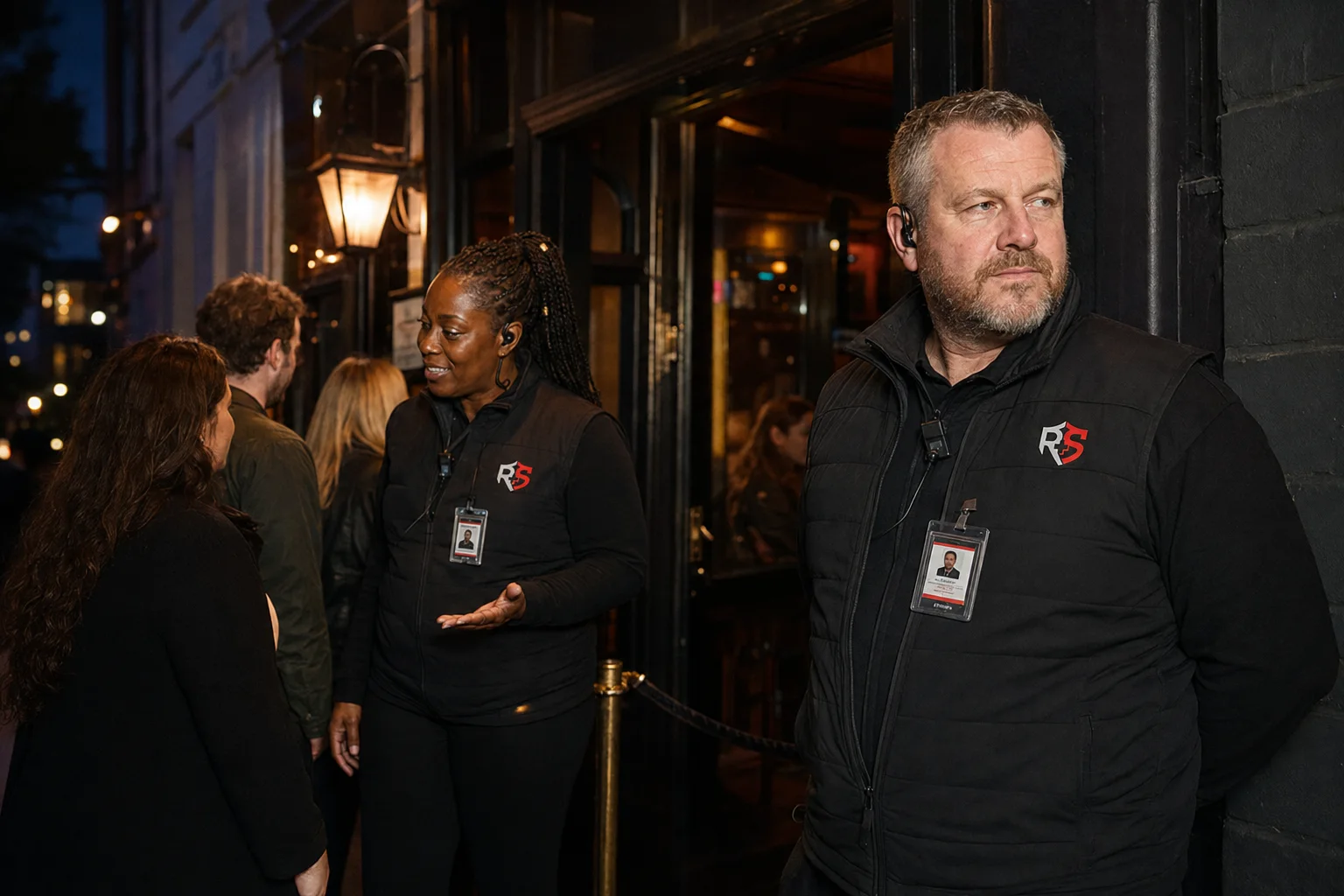
The first conversation at an entrance can set the tone for the whole event. We brief the team on your admission policy, guest arrangements and the presentation appropriate to the occasion.
Calm explanations, active listening and a clear route to the event lead help resolve misunderstandings before they disrupt other guests. Where a situation needs support, officers follow the agreed escalation arrangements.
Our event personnel undergo BS 7858 screening and background checks, and hold the relevant SIA licence for their assigned security duties. The event briefing connects that preparation to the venue, audience and timetable.
Relief arrangements are discussed alongside staffing and hours, including breaks, longer event schedules and cover if a team member becomes unavailable.
Agree who can enter each area, how passes are checked and which contact can authorise an exception. Include staff, suppliers and performers in the access plan.
Identify the event lead, first-aid provision and the procedure for reporting a welfare concern. Brief the team on meeting points and how to support the organiser’s emergency arrangements.
Share revised timings, entrance changes and developing crowd concerns with the relevant team members. Keep decisions coordinated with the organiser and venue.
Confirm the final departure arrangements, the agreed end of cover and any incident information or outstanding concerns to pass to the organiser.
Yes. We discuss who handles guest information, crowd observation, access control and other duties so the roles complement each other. Personnel must have the appropriate licence for any licensable security work they perform.
Yes. Tell us about the venue, guest numbers, timings and the level of access control or visible presence you need. The approach should fit the atmosphere of the occasion.
Let us know as early as possible. Changes to the layout, audience or schedule can affect positions, staffing and the cover required; these need to be reviewed together.
Share the venue, date and the kind of occasion you’re planning. We’ll help identify the roles that need covering.