
Less reliance on one employee
Reduce the need for a member of staff to carry the whole responsibility for business access.
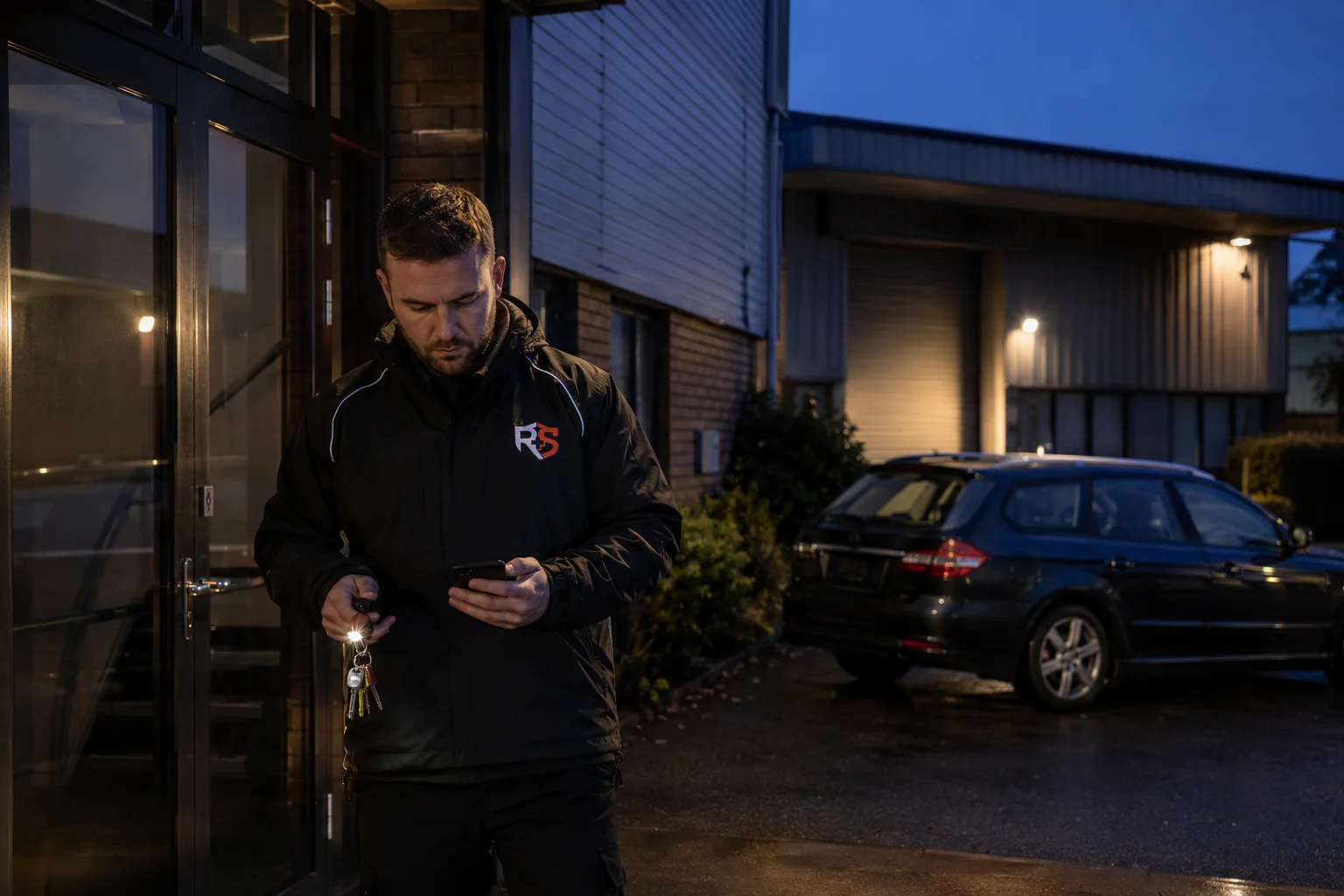
Professional keyholding for business premises, helping reduce the out-of-hours responsibility placed on individual employees.
Discuss your requirementFor many businesses, responsibility for the building follows one employee home. Holidays, sickness and a change of staff can quickly expose the gaps in that arrangement.
Professional keyholding creates a defined security arrangement for access to your premises. It gives you a way to discuss who holds the keys, who can authorise their use and what happens when the property needs attention.
Rescue Security can discuss keyholding for commercial buildings, warehouses, business parks and residential developments, with the scope matched to the location and the access you need covered.
Reduce the need for a member of staff to carry the whole responsibility for business access.
Make the authority to use keys and the circumstances for attendance clear.
Keep the arrangement current when staff, contacts or the premises change.
The value is in the control around them. These are the details to establish when setting up the arrangement.
New locks, changed alarm arrangements or an out-of-date contact number can make previously useful information unreliable.
Holding keys and attending a property are separate parts of the arrangement. If you need attendance following an alarm or another request, that needs to be included explicitly in the scope.
When is attendance covered?Identify the circumstances and hours that the arrangement includes.
What happens at the property?Confirm whether access, an external check or other specific actions are required.
Who makes the next decision?Agree the primary and alternative contacts, particularly where further action needs authorisation.
Location, availability and attendance expectations are discussed before cover is agreed.
No. Keyholding, attendance and any alarm-related duties need to be agreed as part of the arrangement. Tell us the circumstances you want covered so those expectations are clear from the start.
It serves a different purpose. Keyholding provides an agreed arrangement for access; manned guarding provides a person at the premises during the hours of cover. Some properties may need both.
Share the property type, location and the access or attendance requirement. Do not put keys, access codes or alarm details into the initial website enquiry; the appropriate information exchange can be arranged directly.
Tell us about the premises and who currently manages out-of-hours access. We’ll discuss the arrangement you need.